Digital Footprints on the Moon
Mankind follows its computers into space
1s and 0s leaving trail never to be blown away by wind and covered by regolith dustOur own boots will leave their mark eventually
But the trail ahead is paved in code and photographsThe man on the moon is remembered
Just as much as his ship is immortalizedThese digital pioneers do not replace us
They are simply the staircase we have built into the heavens
Porygon, the Virtual Pokémon
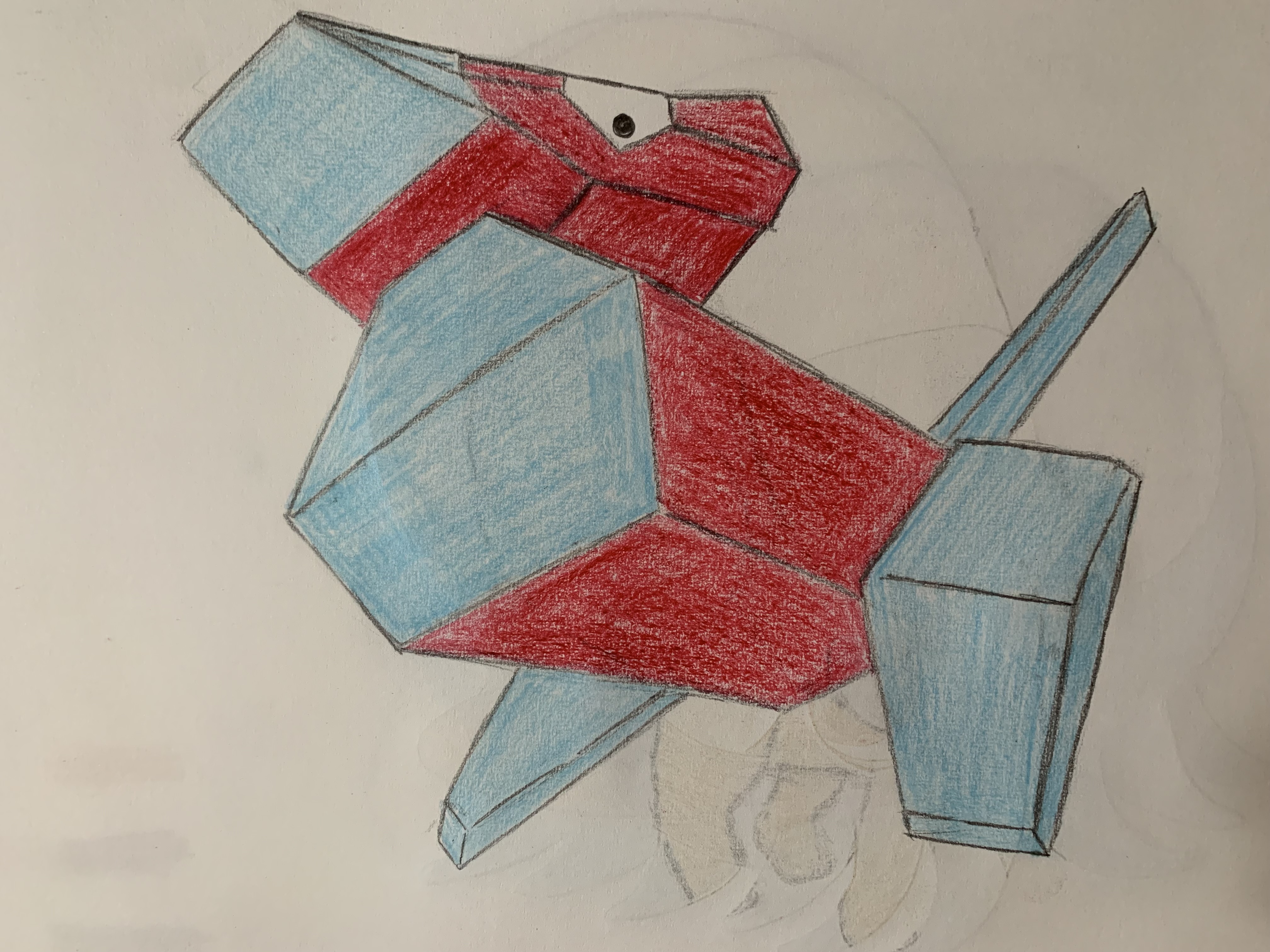
“Years ago, during the fall of the criminal organization Team Rocket in the Kanto region, a new Pokémon was discovered from within Silph Co.’s database; Porygon, the first-ever code-constructed Pokémon. This ‘species’ of Pokémon are lines of code given physical form, with the ability to insert themselves into computer databases and ‘live’ as a string of codes and back again to a physical form. It does not eat nor breath, as it has no internal organs; even its eyes are nothing but ones and zeroes given a texture pack. Theoretically, this Pokémon could survive in any environment in or beyond our planet, though we have yet to send any Porygon into space. That was the original purpose of its creation, to help mankind in creating functional machinery to assist us in space travel, but the form of Porygon was incomplete as it was first discovered, and attempts to evolve it into a complete program have only resulted in the corrupted Porygon-Z evolution.”
“Though proof of its use for space travel has not been proven, there are rumors the Pokémon has been used to prove time travel. In what little documentation that’s been saved from the people of Hisui’s expeditions around their region, a few pages nearly lost to degradation supposedly mention a Pokémon believed to be Porygon observed in their time; depictions and names have been lost, but mentions of the color, odd body shape and its lack of breath or heartbeat match what we know of Porygon in our time. If it is true and Porygon have existed near centuries before they were supposedly created, the implications of how and when they got there could mean much more for the future of our world.”